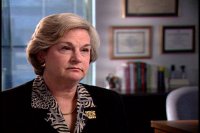
The Marketing of Madness – Are We All Insane?


The Marketing of Madness–Are We All Insane?
There is no money in “normal”

This is the story of the high-income partnership between psychiatry and drug companies that has created an $80 billion psychotropic drug profit center.

But appearances are deceiving.

How valid are psychiatrists’ diagnoses–and how safe are their drugs?

Psychiatrists tell us that the way to fix unwanted behavior is by
altering brain chemistry with a pill.

But unlike a mainstream medical drug like insulin, psychotropic
medications have no measurable target illness to correct, and can upset the very delicate balance of chemical processes the body needs to run smoothly.

Nevertheless, psychiatrists and drug companies have used these drugs to create a huge and lucrative market niche.

And they’ve done this by naming more and more unwanted behaviors as “medical disorders” requiring psychiatric medication.

But should these really be called diseases?

So the question is:

How did psychotropic drugs, with no target illness, no known curative
powers and a long and extensive list of side effects, become the go-to
treatment for every kind of psychological distress?

And how did the psychiatrists espousing these drugs come to dominate the field of mental treatment?

Click here to preview this new documentary video.

Posted in Big Muddy River Newsletter, Press Releases | Comments Off on The Marketing of Madness – Are We All Insane?

Update on U.S. Health Care Reform Bills

There are dozens of organizations that are objecting to provisions in the U.S. health care reform bills. As the primary mental health watchdog organization, CCHR has been hard at work identifying the specific mental health provisions in these bills so we can inform the public of the very real risks of various aspects of these bills that clearly are designed to benefit the psycho/pharmaceutical industry, not the general public.

To read CCHR’s analysis of the House Bill and two Senate Health Care Reform bills (which will soon be merged into one Senate bill), and to find out where all of this is heading before a final bill/vote is completed, click here.

Posted in Big Muddy River Newsletter, Press Releases | Comments Off on Update on U.S. Health Care Reform Bills

Army Psychiatrist Goes on a Rampage

Army Psychiatrist Kills 12, Wounds 38

An Army psychiatrist about to be shipped overseas allegedly opened fire at the Fort Hood, Texas, Army post Thursday, November 5, 2009 on a rampage that killed 12 people and left 38 wounded in the worst mass shooting ever at a military base in the United States.

The psychiatrist was identified as Maj. Nidal Malik Hasan, a 39-year-old, eight-year veteran from Virginia. The shooting occurred at the Soldier Readiness Center where soldiers who are about to be deployed or who are returning undergo medical screening.

Hasan may have been treating himself with psychotropic medications. Psychiatrists in general have a history of “self-medication” because of the easy access they have to psychotropic drugs. It is possible that the Major was taking one of these drugs that carry warnings of increased risk of violence and suicide attached to their use; it is important for those investigating this crime to find out if he was taking or withdrawing from any psychiatric drugs, or if he was receiving any other form of psychiatric treatment. For more information about the side effects of psychotropic drugs, click here.

This is not the first such incident of violence or suicide in the U.S. military.

Antidepressants Cause Suicide and Violence in Soldiers

A sizable and growing number of U.S. combat troops are taking daily doses of antidepressants, according to a June, 2008 report in Time Magazine. The psychiatric drugs prescribed to soldiers are known to have side effects that include violence and suicide.

According to the army, in 2007 17% of combat troops in Afghanistan were taking prescription antidepressants or sleeping pills. In the past year one-third of marines in combat zones were taking psychiatric drugs. The army confirms that since 2002 the number of suicide attempts has increased six-fold. And more than 128 soldiers killed themselves last year.

Last year the rate of suicide in the military exceeded that of the general population, and was the highest since the Army began tracking it in the 1980s. In May, 2009 a U.S. soldier allegedly killed five other military personnel and wounded three at Camp Liberty, a U.S. base just outside Baghdad. The shooting took place at a stress clinic, where soldiers suffering mental problems can go for treatment or counseling.

On July 22, 2009 the US Senate approved an amendment (SA 1475 page:S7416) proposed by Senator Benjamin Cardin (D-MD) to the 2010 defense authorization bill (S. 1390) that would order an independent study by the National Institute of Mental Health on the potential relationship between suicide or suicide attempts and the use of antidepressants, anti-anxiety and other behavior-modifying prescription drugs.

The use of psychiatric drugs escalates when, and only when, the psychopharmaceutical industry targets new markets to increase profits. Antidepressants are a hoax — a hoax that is killing members of our armed services.

Watch the video documentary The Marketing of Madness – Are We All Insane?; this is the definitive documentary on psychotropic drugs and how the psychiatrists market madness. Here is the story of the high income partnership between psychiatry and drug companies that has created an $80 billion psychotropic drug profit center. Digging deep beneath the corporate veneer, this three-part documentary exposes the truth behind the slick marketing schemes and scientific deceit that conceal a dangerous and often deadly sales campaign.

Posted in Big Muddy River Newsletter, Press Releases | Comments Off on Army Psychiatrist Goes on a Rampage

New Health Care Bill Drafted by House of Representatives Filled with Psycho/Pharma Industry Agenda

The newly-forged 1990-page “Affordable Health Care for America Act” (H.R.3962) drafted by the U.S. House of Representatives is filled with mental health provisions intended to prop up psychiatry as well as the pharmaceutical industry with billions in future income.

Key mental health components of this House bill include: The Mothers Act, school based health clinics for mental health screening/treatment of children, mental health parity (psycho/pharma industry billing initiative) and more.

The MOTHERS Act
The bill includes the language of the MOTHERS Act, to “expand treatment for postpartum conditions” and calls for the development of “improved screening and diagnostic techniques,” but makes no provisions to ensure any entities doing such research are free from conflicts of interest or pharmaceutical funding.

For example, Screening for Mental Health, Inc., and its sub-organization Signs of Suicide, who heavily promote and conduct mental health screening, received $4,985,925 from pharmaceutical companies prior to 2008, and ten leading psychiatric researchers have been exposed in the last year for failing to disclose millions of dollars in pharmaceutical payments.

Yet this bill contains no provisions for full disclosure of conflicts of interest for any “entity” that could receive federal taxpayer funded grants, do research or promotional campaigns – such as the provision in the bill calling for a national PR campaign using TV, radio public and other public service announcements to urge women be screened and seek treatment for postpartum depression.

The bill also calls for “clinical research” for the development of new treatments (drugs), but again, no guidelines for ensuring that any researchers/research entities are free from pharmaceutical funding or conflicts of interest. [Section 2529, Page 1418]

Mental Health Parity
The bill mandates Mental Health Parity, or equal insurance coverage for mental disorders as what are covered for physical diseases, whether under their regular health insurance or whether a person gets their new coverage through the Health Insurance Exchange.

Psychiatric patients are traditionally “cured” when their insurance benefits run out. In this bill, those benefits never run out. Considering there are no medical tests to verify the existence of any psychiatric disorder, and without anything other than a psychiatrist’s opinion about whether or not the person’s “illness” is “cured,” this legislation becomes nothing more than taxpayer funded billions to the psycho/pharmaceutical industry who will continue their jihad of mass drugging of Americans.

This provision could easily encompass all 374 diagnoses in psychiatry’s diagnostic manual, covering everything from Phase of Life Problem to Arithmetic Disorder.  [Section 214, Page 100]

Home Visitation Programs for Families with Young Children or Families Expecting Children
The bill creates a home visitation program for families with young children or which are expecting children or who have certain “risk factors.” The program provides assessments regarding matters of “age appropriate behaviors,” for children, prevention of family violence and referral to outside services.  [Section 1904, Page 1177]

School Based Health Clinics
The bill includes funding for School Based Health Clinics that will include subjective psychiatric mental health screening (called mental health assessments) of children, and “referral to a continuum of services including emergency psychiatric care, community support programs, inpatient care, and outpatient programs” as part of their “comprehensive primary health services.” This is a direct feeder line for the psycho/pharmaceutical industry directly into our schools. [Section 2511, Page 1352]

Wellness Program Grants for Small Employers
The grants in the bill serve as an incentive for employers to include “mental health” as part of the Wellness Program Grants to businesses. Part of the program entails a “Behavioral Change Component” that encourages “healthy living through counseling” and may include programs relating to “tobacco use, obesity, stress management, depression and mental health.” [Section 112, Page 67]

Federally Qualified Behavioral Health Centers
The bill creates new “Federally Qualified Behavioral Health Centers” and in order for existing community mental health centers to qualify, they have to provide, among other things, “mental health screening, assessment, and diagnosis,” as well as “outpatient clinic mental health services, including screening, assessment, diagnosis, psychotherapy and medication,” in addition to “crisis mental health services including 24-hour mobile crisis teams.”  [Section 2513, Page 1367]

WHAT YOU CAN DO

Your voice needs to be heard in Washington on this outrageous bill. Call, fax, or email your Representative and tell them that you are opposed to the above points in the Health Care Reform bill.

To find your Representative and get their contact information, go to http://www.congress.org/congressorg/directory/congdir.tt to look them up (you need to enter your zip code). You can also call the U.S. Capitol Switchboard at (202) 224-3121.

Posted in Big Muddy River Newsletter, Press Releases | Comments Off on New Health Care Bill Drafted by House of Representatives Filled with Psycho/Pharma Industry Agenda

Psychiatry & Politics

featuring G. Edward Griffin, author of The Creature from Jekyll Island, a critically acclaimed book about the U.S. Federal Reserve — on Congressman Ron Paul’s “Reading List for a Free and Prosperous America”.

PBS News just reported on how Chinese dissidents, whistleblowers and government petitioners are being labeled “mentally ill,” incarcerated in psychiatric wards and subjected to electroshock — a tactic reminiscent of Soviet Russia and the alliance between psychiatry and the police state.

The marriage of psychiatry with communist/socialist and police state regimes has spanned countries across the globe as an effective means to deal with political dissension. These practices are not limited to Russia, China, Cuba or Uzbekistan, all of which have recently employed similar psychiatric incarceration of citizens for political protest.

In the UK, a specialized unit called the Fixated Threat Assessment Centre has been granted the authority to incarcerate anyone who has given “inappropriate or threatening communications” to a member of government into a psychiatric ward. The assessment teams are made up of police, psychiatrists and psychologists who have been given the authority to evaluate, accuse and detain anyone against threat into a mental facility — indefinitely.

If you think this couldn’t happen in the U.S., think again.

Posted in Big Muddy River Newsletter, Press Releases | Comments Off on Psychiatry & Politics

New Video & Blog “No More ADHD”

More than 4 million children in the U.S. alone have been labeled with ADHD and put on drugs documented by the FDA to cause tics, stunted growth, heart attack, stroke and sudden death. The U.S. Drug Enforcement Administration (DEA) classifies Ritalin, Concerta and other ADHD drugs in the same class of highly addictive drugs as cocaine, morphine and opium.

Psychiatric drugging of kids is big business. ADHD drugs sales alone generate $3.1 billion a year. Parents need to be informed that not only is the diagnoses of ADHD completely subjective (a child fidgets, stares out the window, forgets his homework and he can be diagnosed ADHD) but that there are non-drug solutions for solving children’s problems of behavior, attention and learning. Parents have a right to this information.

Dr. Mary Ann Block, Medical Director & Founder of the Block Center, and author of No More ADHD is our featured blog/video interview this week: click here .

Posted in Big Muddy River Newsletter, Press Releases | Comments Off on New Video & Blog “No More ADHD”

The CIA Mind Control Doctors: From Harvard to Guantanamo

Psychiatrist Colin Ross, author of
The CIA Doctors and Military Mind Control exposes the longstanding relationship between the CIA, the military and psychiatry in mind control experiments including the use of LSD, psychiatric drugs, hypnosis, radiation, brain electrode implants and torture—verified through declassified CIA documents. If you think these mind control experiments are a thing of the past, think again.

“My book, The C.I.A. Doctors, is based on 15,000 pages of documents I received from the CIA through the Freedom of Information Act and dozens of papers published in medical journals. These papers report the results of research funded by the Air Force Office of Scientific Research, the Department of the Army, the Office of Naval Research and the CIA.”

To read the rest of this blog article, click here

Posted in Big Muddy River Newsletter, Press Releases | 1 Comment

Doping up our children

Doping up our children

(Orlando Sentinel Editorial)

August 31, 2009

The state’s Department of Children and Families is under fire again, and rightly so.

Recently, a task force issued its final report documenting how weak oversight and lax compliance with guidelines fostered a culture where officials often blindly doled out powerful drugs as chemical pacifiers to help caregivers manage difficult children.

These troubling concerns aren’t new to DCF. But in the wake of the withering report, DCF Secretary George Sheldon concedes lapses and vows to heed and fund task-force proposals.

Such accountability is encouraging. But we expected reform before. In 2003, the Statewide Advocacy Council report made similar findings, and concluded, “…unnecessary dispensing of psychotropic medication remains a threat to [foster children]. Until there is more information regarding the safety and efficiency of these drugs, Florida’s foster care children should be monitored closely.”

That report’s proposals were largely ignored. Now, six years later, only swift reforms and a strong mandate to comply with existing rules that govern psychotropic drugs will shelve suspicions that this is déjà vu all over again.

Gabriel Myers becomes the latest Florida foster child whose tragic end led to familiar calls for DCF reform. The boy was removed from his drug-addled mother and turned over to state custody on June 29, 2008. Gabriel hopscotched between a relative and a foster home over the next 10 months. While in state care, he received several psychotropic drugs without valid parental or court consent, as state law requires. One of the drugs, Symbyax, an adult antidepressant, can lead to suicidal thoughts or actions.

On April 16, Gabriel put a shower cord around his neck in the bathroom of his Margate foster home.

Shortly afterward, Mr. Sheldon convened the Gabriel Myers Work Group to investigate the tragedy. The group’s 26-page report outlined 148 systemic breakdowns in Gabriel’s death.

It notes the egregious disregard of safeguards for foster children that are well “articulated in statute, administrative rule, and operating procedures.” Breakdowns in communication, advocacy, supervision, monitoring and oversight only exacerbated matters.

Gabriel was repeatedly evaluated while in care, and often saw therapists, including one who noted, “It is clear that this child is overwhelmed with change and possibly re-experiencing trauma.” Somehow, though, caregivers missed the red flags.

And the report backs child advocates who long have insisted the state overmedicates kids: “Psychotropic medications are at times being used to help parents, teachers, and other caregivers calm and manage, rather than treat, children.”

In Florida, 15.2 percent of foster kids take at least one psychotropic drug, compared with a 5 percent rate among the general population.

DCF must junk the “fix-it with pharmaceuticals” mentality that, for the sake of expediency, often skirts safer avenues for taming disorderly behavior. Adopting the task force’s call for “a higher requirement for due diligence prior to seeking approval for administering these drugs” would be a step forward.

The task force outlines a raft of reforms that include beefing up therapeutic services, adding court-appointed guardians, and bringing on a medical director to direct the use of psychotropic drugs.

Mr. Sheldon says he’ll free up resources within DCF to act on the suggestions. And despite austere budgets, he vows to cajole the Legislature to fund such options as behavioral therapy as an alternative to drug therapy. But a will to change must follow words.

Mr. Sheldon told the Fort Myers News-Press that in the past, “Regrettably, I’m afraid people said, ‘We dodged a bullet’ and it [reforms] never got out into the field. That cannot be the case this time.”

It better not. Or DCF almost assuredly in the months to come will experience another tragic case of déjà vu.


Copyright © 2009, Orlando Sentinel
Posted in Big Muddy River Newsletter, Press Releases | Comments Off on Doping up our children

CCHR: What We Believe

We Believe

Watch our new video, CCHR: What We Believe

Then read CCHR’s Mental Health Declaration of Human Rights.

Posted in Big Muddy River Newsletter, Press Releases | Comments Off on CCHR: What We Believe

Video & Blog with Psycho/Pharma whisteblower Allen Jones

Get the facts about “Depression Testing” of kids from a real Insider
—renowned whistleblower, Allen Jones

Allen Jones gained international attention and press coverage as a whistleblower after he uncovered pharmaceutical industry payments to government officials for the purpose of implementing a national mental health screening/psychotropic drug treatment plan. In this video interview and blog, Allen describes the pharma funding and psycho/pharma agenda behind mental health “screening” of schoolchildren.

To read the rest of this blog article, click here

Posted in Big Muddy River Newsletter, Press Releases | Comments Off on Video & Blog with Psycho/Pharma whisteblower Allen Jones